

Drums for children: finding the right drum kit for young beginners
A drum kit for children should meet three key requirements above all: it should fit the child’s size, be sturdy enough for regular practice, and make learning fun and motivating. Compact junior drum kits or simple percussion instruments are ideal for younger children, while older kids can also start with an electronic drum kit or a compact beginner acoustic set depending on the living situation.
Important: not every small drum kit is automatically a toy. A good children’s drum kit allows real rhythm practice, improves coordination, and makes the transition to a full-size standard drum set much easier later on.
At what age does a drum kit make sense for children?
Getting started depends less on the exact age and more on body size, concentration, and motor skills. Many children can begin with simple rhythm instruments as early as preschool age. A proper junior drum kit becomes useful once the child can sit comfortably, reach the pedals and drums, and imitate simple rhythms.
As a general guideline:
- approx. 3 to 6 years: small percussion instruments, hand drums, cajons, or very compact junior kits
- approx. 6 to 10 years: junior drum kits with child-friendly shell sizes
- from approx. 10 years: depending on body size, compact standard kits or e-drums
- from approx. 1.50 m height: small standard drum kits may already be suitable
The seating position is crucial: the child should be able to control the pedals comfortably without stretching. Snare, toms, and cymbals must all be within easy reach to avoid developing poor posture habits.
Children’s drum kit, junior drum set, or standard drum kit?
A children’s drum kit is smaller and lighter than a standard drum kit. This allows children to play more naturally because the distances, seating height, and drum sizes are better proportioned.
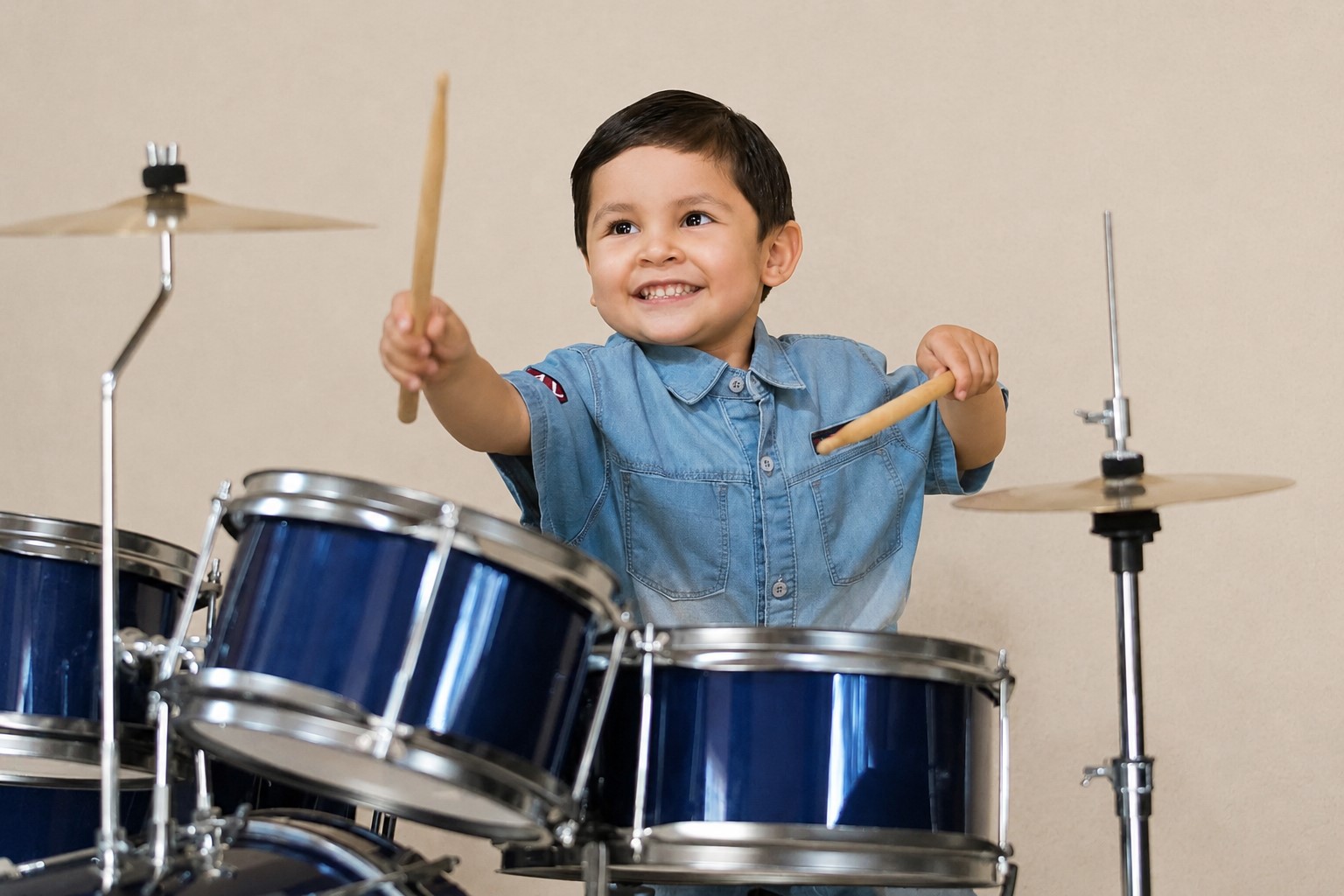
A junior drum set is the better musical choice if the child genuinely wants to learn drums. Depending on the model, it consists of three or five drums and usually includes cymbals, a stool, sticks, and basic hardware.
A full-size drum kit only makes sense once the child is tall enough or already taking lessons seriously. Oversized kits can be frustrating at first because movements become unnecessarily difficult and pedals are harder to reach.
3-piece or 5-piece drum kits for children?
For beginners, a 3-piece kit is often enough. It focuses on the essentials: bass drum, snare, and tom. Children can learn rhythm, coordination, and basic grooves without being distracted by too many components.
A 5-piece junior drum set offers more possibilities. Additional toms make fills more exciting, and the kit feels closer to a “real” drum set. This makes sense if the child already takes lessons, shows strong motivation, or wants to practice in a more band-oriented way.
In short:
3-piece kits are simple and space-saving. 5-piece kits are more versatile and better suited for long-term use.
› Compare children’s drum kits
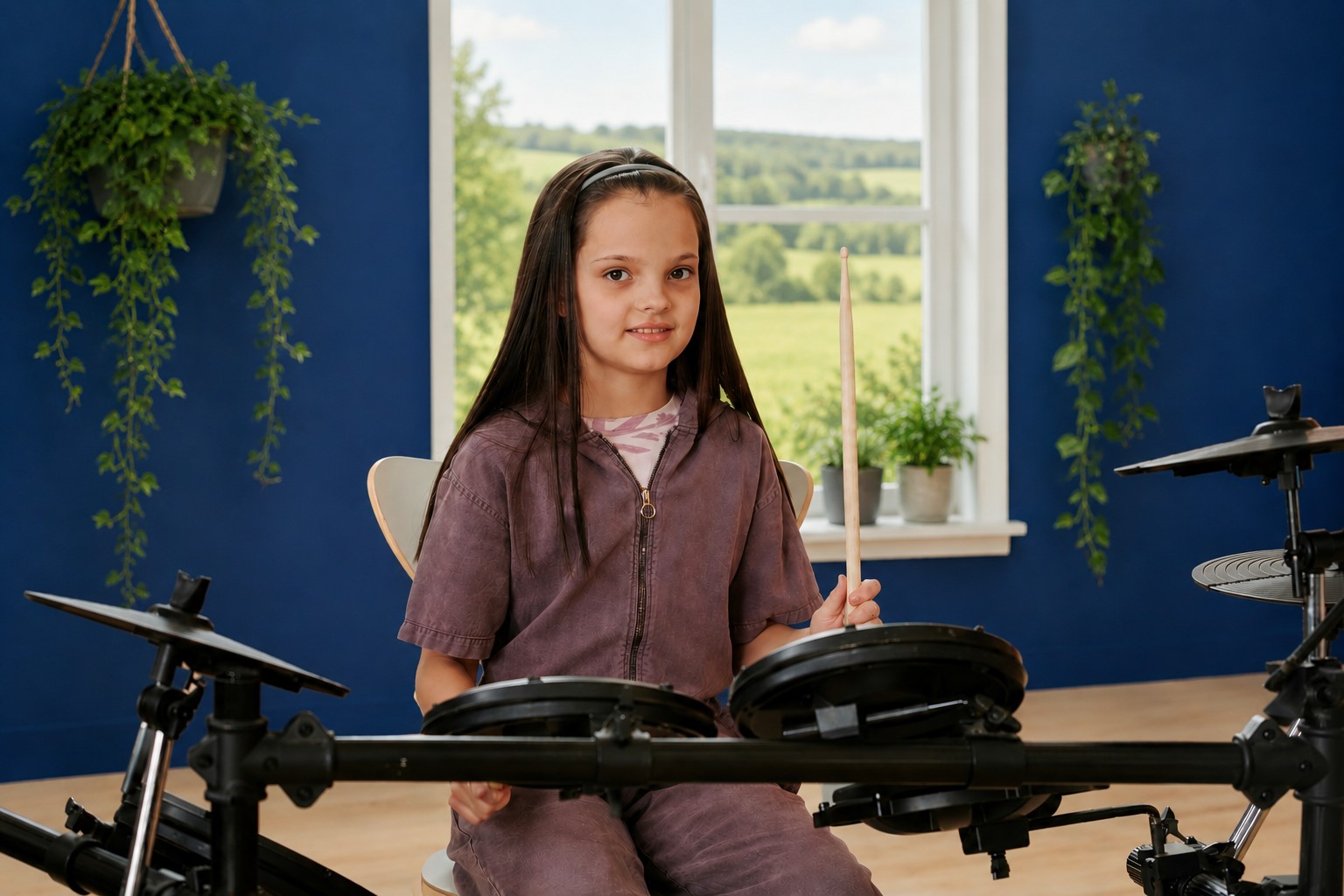
Acoustic drum kit or e-drums for children?
The most important question is: where will the child practice?
An acoustic children’s drum kit offers a direct and natural playing feel. Children experience the real dynamics of drums and cymbals and learn how different playing intensities affect the sound. This is ideal for a dedicated music room, basement, or a house with tolerant neighbors.
An electronic drum kit is the better option if volume and space are important factors. Practicing with headphones is significantly quieter. Many e-drums also offer different sounds, metronome functions, and practice tools. For apartments, this is often the more practical solution.
However, even e-drums are not completely silent. Impact noise from pedals and pads can still be heard. A drum mat or isolation platform helps reduce vibrations and floor noise.
What should you look for when buying a drum kit for children?
The right size
The size determines both comfort and learning progress. The child should be able to sit upright without raising their shoulders or arms. Pedals must be reachable without the feet slipping.
Stable hardware
Children often play with a lot of energy. That’s why stands, tom holders, stools, and pedals should be stable enough. Wobbly hardware quickly reduces motivation and causes faster wear and tear.
Complete beginner set
For beginners, a kit with as much essential equipment included as possible is very practical. Useful components include:
- drums
- cymbals or cymbal pads
- stool
- bass drum pedal
- sticks
- basic hardware
This allows the child to start playing immediately without needing lots of extra parts right away.
Volume and practice space
An acoustic children’s drum kit can be loud indoors. If you live in an apartment, you should consider e-drums, drum dampeners, low-volume sticks, or a good practice mat. Hearing protection is also highly recommended for children, especially with acoustic kits.
Expandability
If the child sticks with drumming, upgrades will eventually become interesting. Additional cymbals, better drumheads, a sturdier stool, or a larger kit are common next steps.
Is children’s percussion a good alternative?
Yes, especially for younger children. Shakers, claves, hand drums, cajons, or small percussion sets are a playful introduction to rhythm and timing. They take up little space, are usually more affordable, and don’t overwhelm children with pedals, cymbals, and multiple drums.
Children’s percussion doesn’t replace a drum kit, but it can be an excellent first step. If the child continues to enjoy rhythms over time, a junior drum set is the logical next stage.
› Children’s percussion for beginners
Which accessories are important?
These accessories are especially useful for a children’s drum kit:
- Children’s or lightweight drumsticks: easier to control than heavy standard sticks
- sturdy drum stool: important for posture and playing comfort
- hearing protection: especially recommended for acoustic kits
- drum mat: prevents slipping and reduces floor noise
- learning book or lessons: helps create a structured start
- headphones: required for e-drums
Especially in the beginning, accessories should not be overly complicated. Less is often more: a properly adjusted kit, suitable sticks, and regular short practice sessions achieve more than a huge setup that overwhelms the child.
What is the best way for children to learn drums?
Children learn best through play and in short practice sessions. Ten to fifteen minutes of focused practice are often more effective than long sessions. The key is giving the child quick successes: simple grooves, playing along with favorite songs, or rhythm games.
Lessons can be very helpful
When does it make sense to upgrade?
An upgrade becomes worthwhile once the child outgrows the kit, practices regularly, or needs more options for lessons. Typical signs include:
- the stool and drums can no longer be adjusted properly
- the child wants more toms or better cymbals
- the kit sounds or responds too limited
- lessons or band playing require a larger setup
- the child remains motivated over a longer period
At that point, upgrading to a compact standard drum kit or a better-equipped electronic drum set can make sense.
Find drums for children at MUSIC STORE
At MUSIC STORE, you’ll find suitable beginner options for different age groups and living situations: from children’s drum kits and children’s percussion to e-drums for quieter practice. For parents, the most important first step is to clarify the basic requirements: age, height, space, volume, and motivation.
Anyone looking for a first real drum kit is best advised to start with children’s drum kits and junior drum sets. For very young children or playful rhythm training, children’s percussion is well worth a look. If quiet practice at home is important, e-drums are a practical alternative. Lessons can also be very helpful, as they support good posture, stick technique, and coordination right from the start. For getting started at home, simple exercises are also enough:
- clap and play quarter notes
- alternate between bass drum and snare
- practice simple rock beats slowly
- play with a metronome or playalong
- try small rhythm games with parents or siblings

Frequently asked questions about drums for children
› At what age is a drum kit suitable for children?
Many children can start with percussion or very simple rhythm instruments from around the age of three. A junior drum kit usually makes sense once the child can comfortably reach the pedals and drums and imitate simple rhythms.
› Is a children’s drum kit just a toy?
Not necessarily. A good children’s drum kit is smaller, but it is designed as a real beginner instrument. It should stand securely, be tunable, and allow a sensible playing position.
› Which is better: an acoustic children’s drum kit or e-drums?
For a natural playing feel, an acoustic kit is ideal. For apartments or quiet practice, e-drums are usually more practical because they can be played with headphones. However, impact noise remains an issue even with e-drums.
› Is a 3-piece children’s drum kit enough?
For beginners, yes. A 3-piece kit is clear and simple, making it ideal for first grooves. A 5-piece kit offers more playing options and makes sense if the child is especially motivated or already taking lessons.
› What accessories does a child need at the beginning?
Important accessories include suitable sticks, a stable drum stool, hearing protection for acoustic kits, and ideally a mat to prevent slipping. For e-drums, headphones are also needed.
› When should you switch to a larger drum kit?
When the child becomes too tall for the junior kit, practices regularly, or needs more musical options, upgrading to a compact standard kit or a better e-drum set makes sense.